

Political Science Module
|
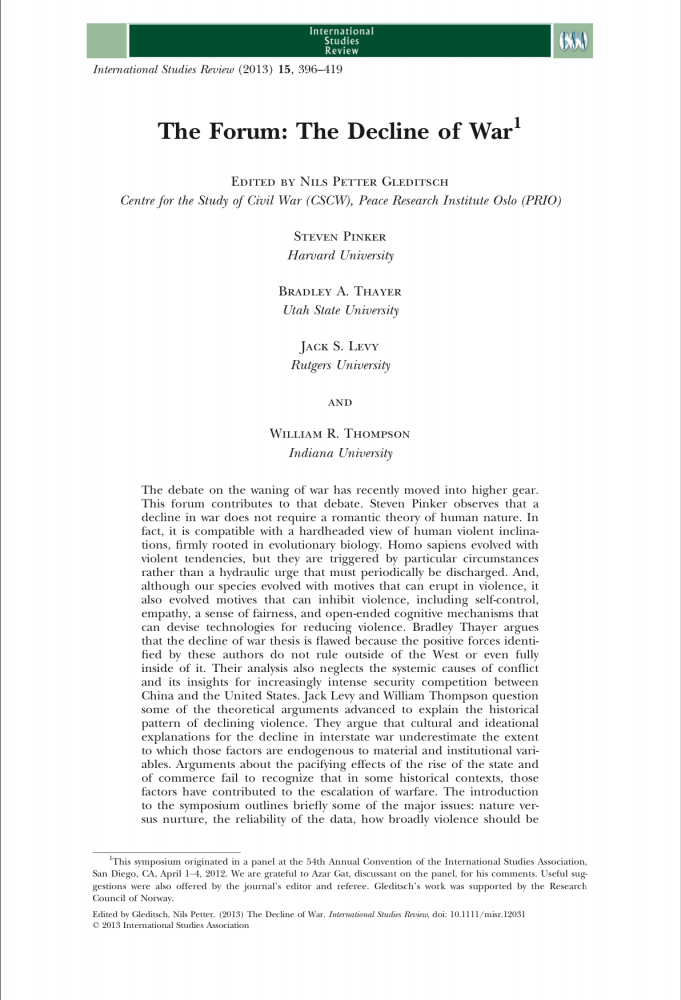
The debate on the waning of war has recently moved into higher gear. This forum contributes to that debate. Steven Pinker observes that a decline in war does not require a romantic theory of human nature. In fact, it is compatible with a hardheaded view of human violent inclinations, firmly rooted in evolutionary biology. Homo sapiens evolved with violent tendencies, but they are triggered by particular circumstances rather than a hydraulic urge that must periodically be discharged. And, although our species evolved with motives that can erupt in violence, it also evolved motives that can inhibit violence, including self-control, empathy, a sense of fairness, and open-ended cognitive mechanisms that can devise technologies for reducing violence. Bradley Thayer argues that the decline of war thesis is flawed because the positive forces [read more] |
 |
|
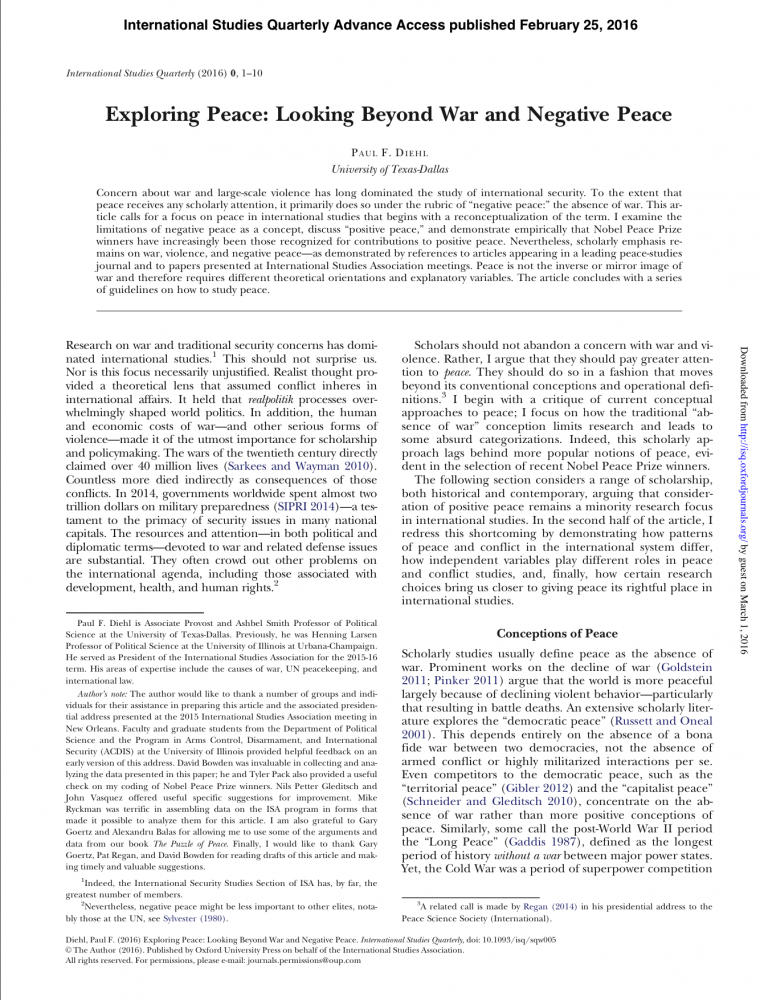
Concern about war and large-scale violence has long dominated the study of international security. To the extent that peace receives any scholarly attention, it primarily does so under the rubric of “negative peace:” the absence of war. This article calls for a focus on peace in international studies that begins with a reconceptualization of the term. I examine the limitations of negative peace as a concept, discuss “positive peace,” and demonstrate empirically that Nobel Peace Prize winners have increasingly been those recognized for contributions to positive peace. Nevertheless, scholarly emphasis remains on war, violence [read more] |
 |
|
This book is a systematic effort by leading international scholars to map the trends in major-power warfare and explore whether it is waxing or waning. The main point of departure is that major-power war as a historical institution is in decline. This does not mean, though, that wars between states are in general disappearing. While there is some convergence in the conclusions by individual authors, they are by no means unanimous about the trend. The articles explore different causes and correlates of the declining trend in major-power warfare, including the impact of the international structure, nuclear weapons [read more] |
 |
|
This authoritative textbook gives a comprehensive account of the European Union's foreign policy. Going beyond the typical focus on the Common Foreign and Security Policy and Common Security and Defence Policy, Keukeleire and Delreux demonstrate the scope and diversity of the EU's foreign policy and show how areas such as trade, development, environment and energy are inextricable elements of it [read more]
|
 |
|
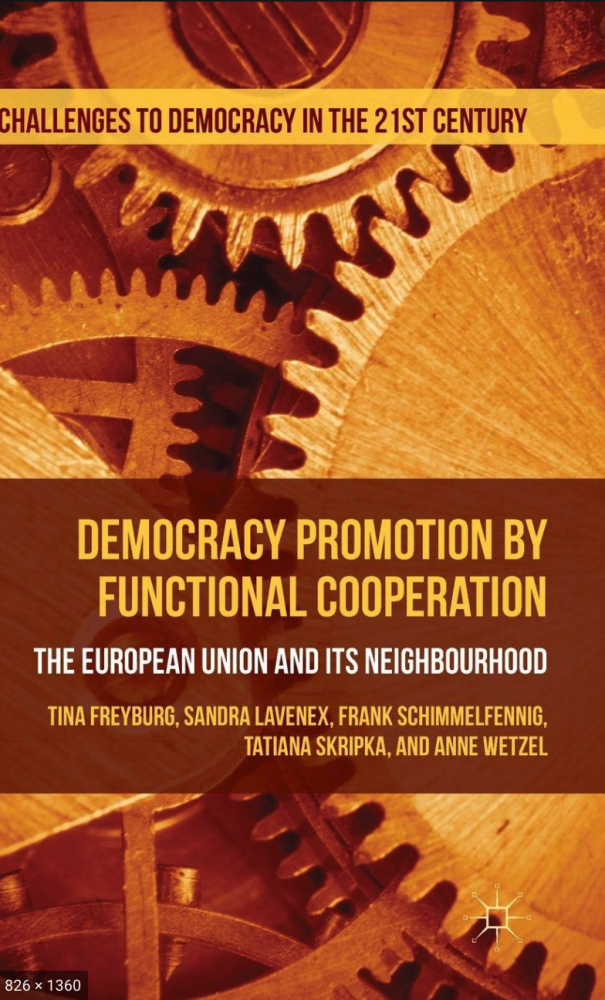
This book presents a novel 'governance model' of democracy promotion. In detailed case studies of EU cooperation with Moldova, Morocco, and Ukraine, it examines how the EU promotes democratic governance through functional cooperation in the fields of competition policy, the environment, and migration.
|
 |
|
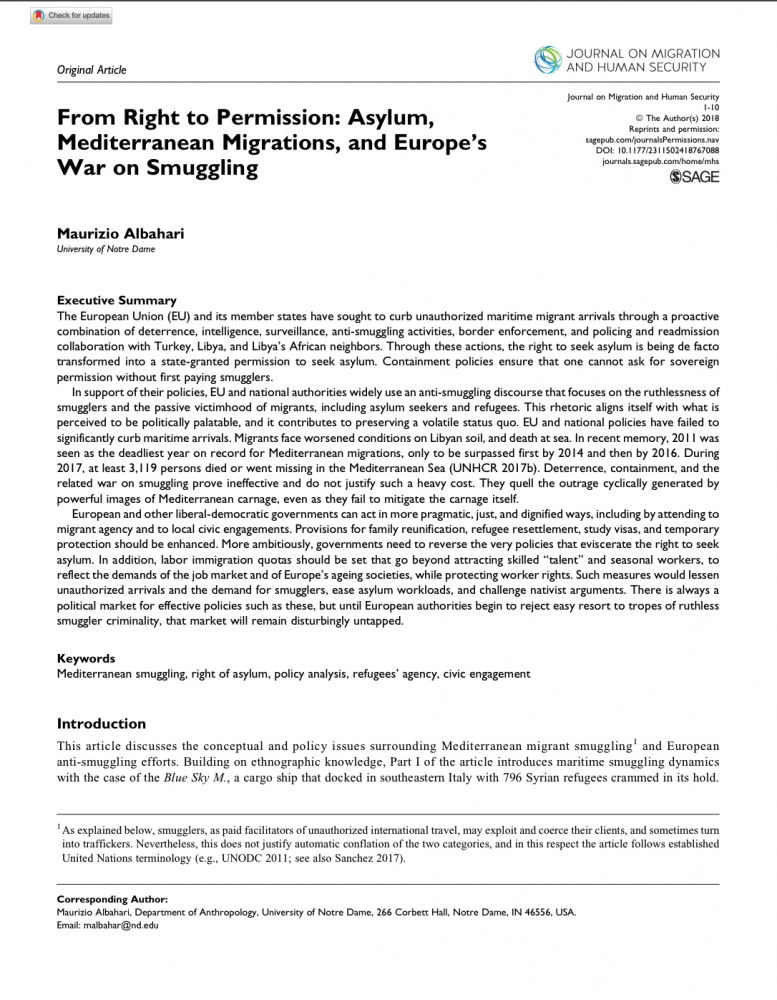
The European Union (EU) and its member states have sought to curb unauthorized maritime migrant arrivals through a proactive combination of deterrence, intelligence, surveillance, anti-smuggling activities, border enforcement, and policing and readmission collaboration with Turkey, Libya, and Libya’s African neighbors. Through these actions, the right to seek asylum is being de facto transformed into a state-granted permission to seek asylum. Containment policies ensure that one cannot ask for sovereign permission without first paying smugglers [read more] |
 |
|
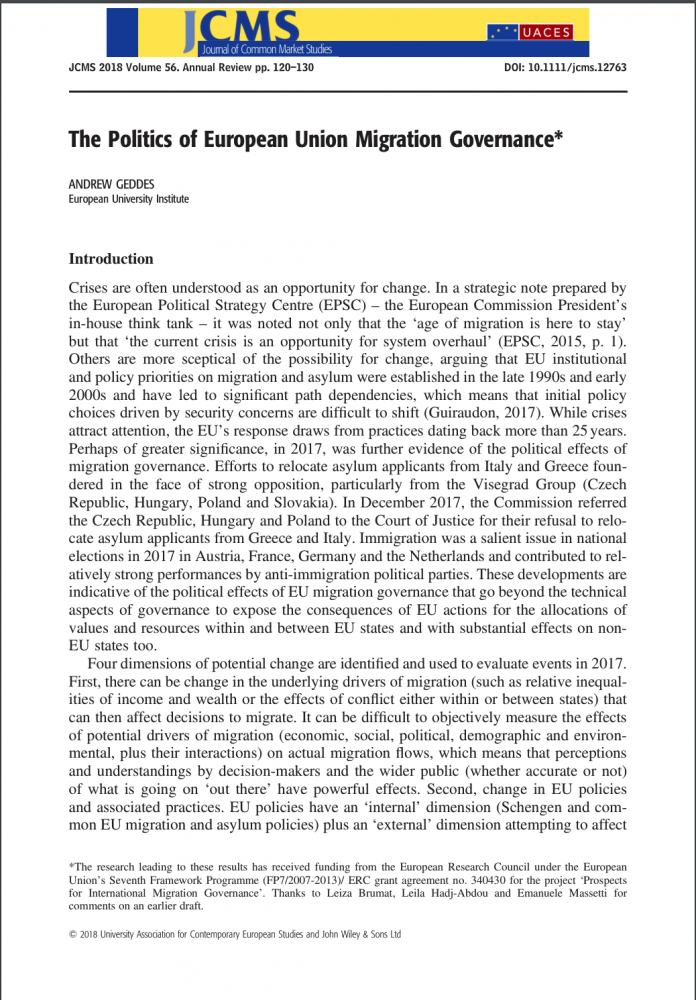
Four dimensions of potential change in EU migration governance are identified and used to evaluate events in 2017. First, there can be change in the underlying drivers of migration (such as relative inequalities of income and wealth or the effects of conflict either within or between states) that can then affect decisions to migrate. It can be difficult to objectively measure the effects of potential drivers of migration (economic, social, political, demographic and environmental, plus their interactions) on actual migration flows, which means that perceptions and understandings by decision-makers and the wider public (whether accurate or not) of what is going on ‘out there’ have powerful effects [read more] |
 |
|
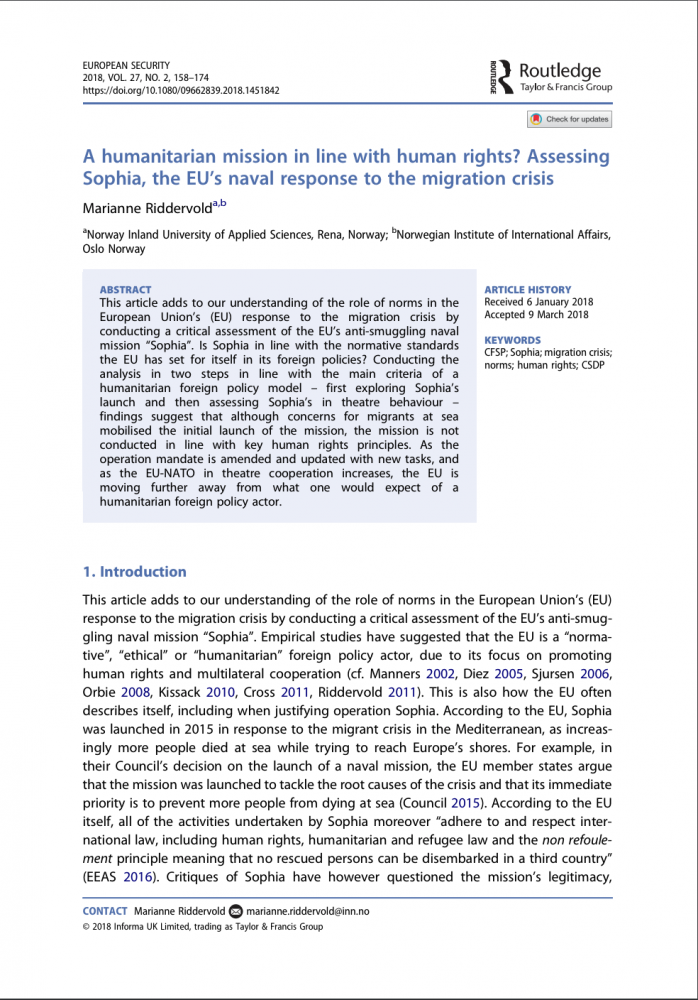
This article adds to our understanding of the role of norms in the European Union’s (EU) response to the migration crisis by conducting a critical assessment of the EU’s anti-smuggling naval mission “Sophia”. Is Sophia in line with the normative standards the EU has set for itself in its foreign policies? Conducting the analysis in two steps in line with the main criteria of a humanitarian foreign policy model – first exploring Sophia’s launch and then assessing Sophia’s in theatre behaviour – findings suggest that [read more] |
 |