
Modulo di Scienza Politica
|
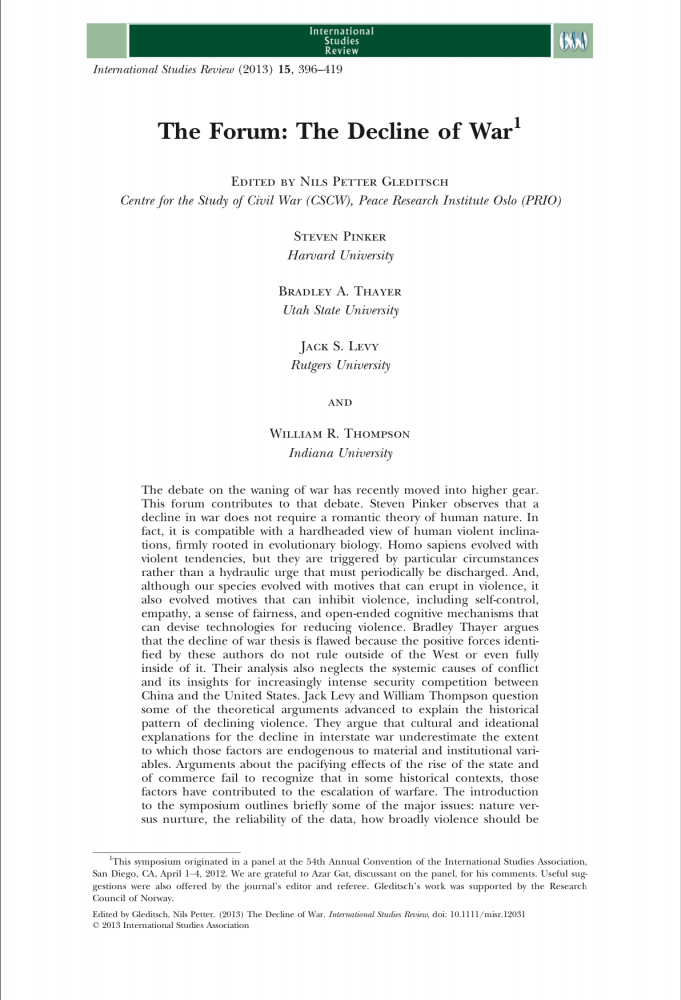
Gleditsch, N. P., Pinker, S., Thayer, B. A., Levy, J. S., & Thompson, W. R. (2013). The forum: The decline of war. International Studies Review, 15(3), 396-419. |
 |
|
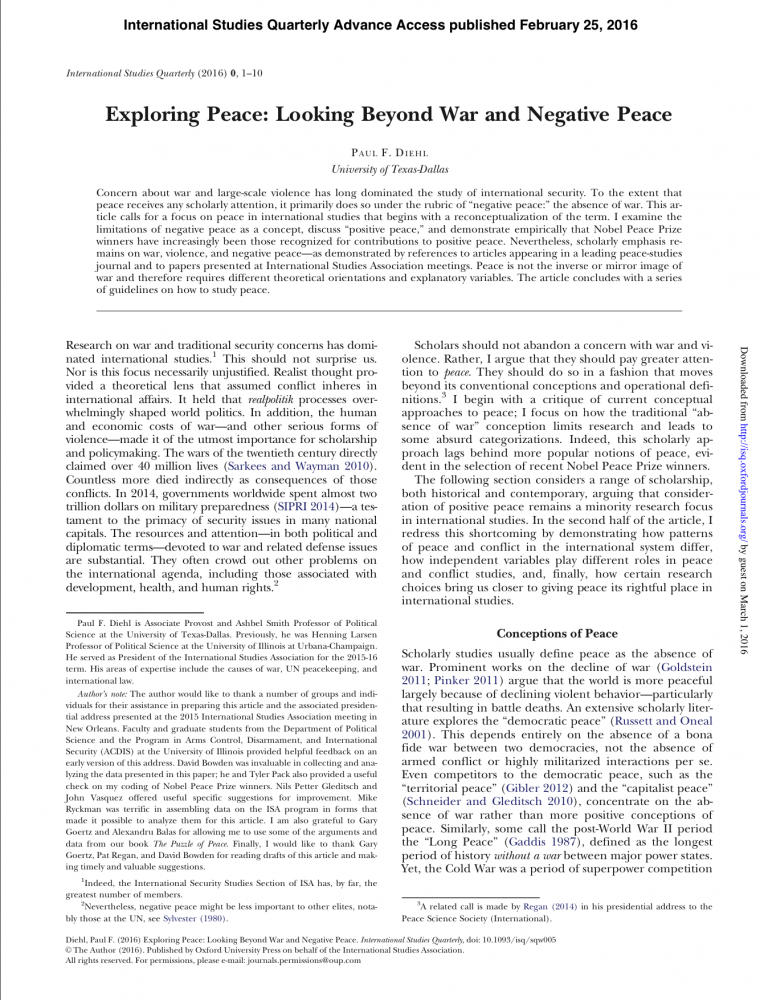
Diehl, P. F. (2016). Exploring peace: Looking beyond war and negative peace. International Studies Quarterly, 60(1), 1-10 |
 |
|
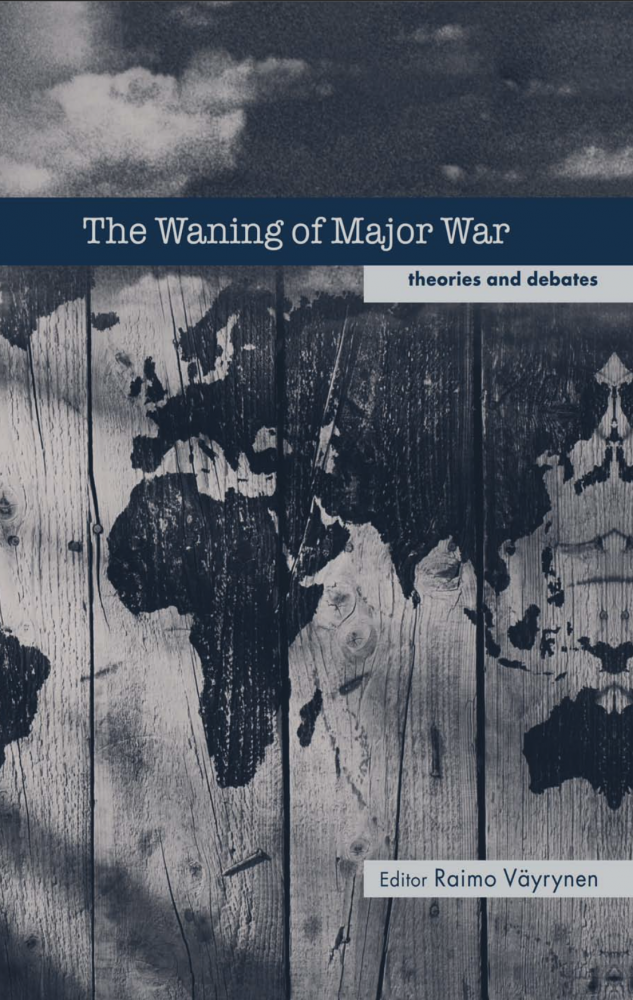
Vayrynen, Raimo, Introduction, in id. (ed. by) The waning of major war: Theories and debates. Routledge, 2013 |
 |
|
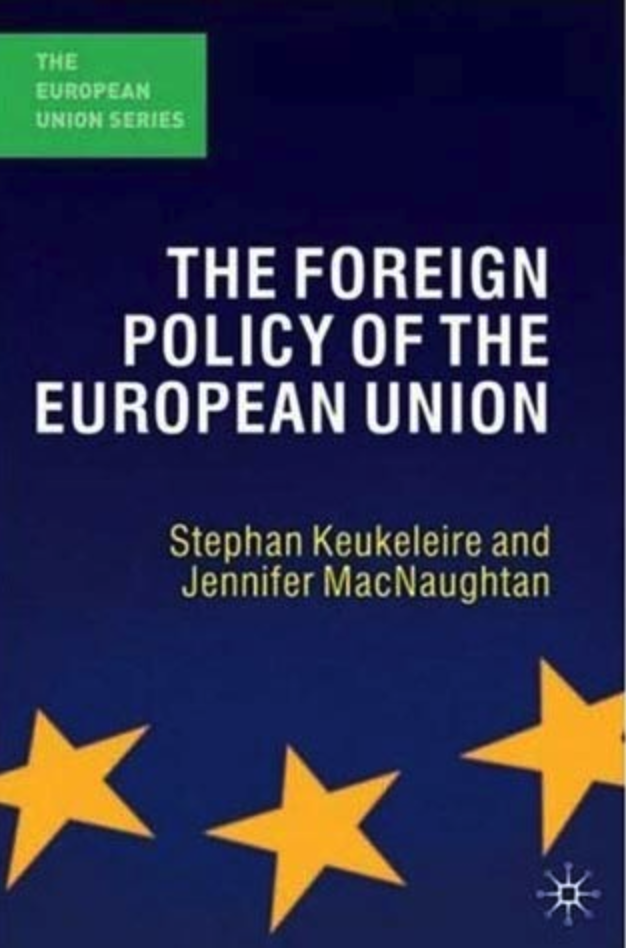
This authoritative textbook gives a comprehensive account of the European Union's foreign policy. Going beyond the typical focus on the Common Foreign and Security Policy and Common Security and Defence Policy, Keukeleire and Delreux demonstrate the scope and diversity of the EU's foreign policy and show how areas such as trade, development, environment and energy are inextricable elements of it. The book examines the EU's key foreign relations – with its neighbourhood, with the US, China and Russia, and with the emerging powers – and argues that the EU's foreign policy needs to be understood not only as a response to crises and conflicts, but also as a means of shaping international structures [read more] |
 |
|
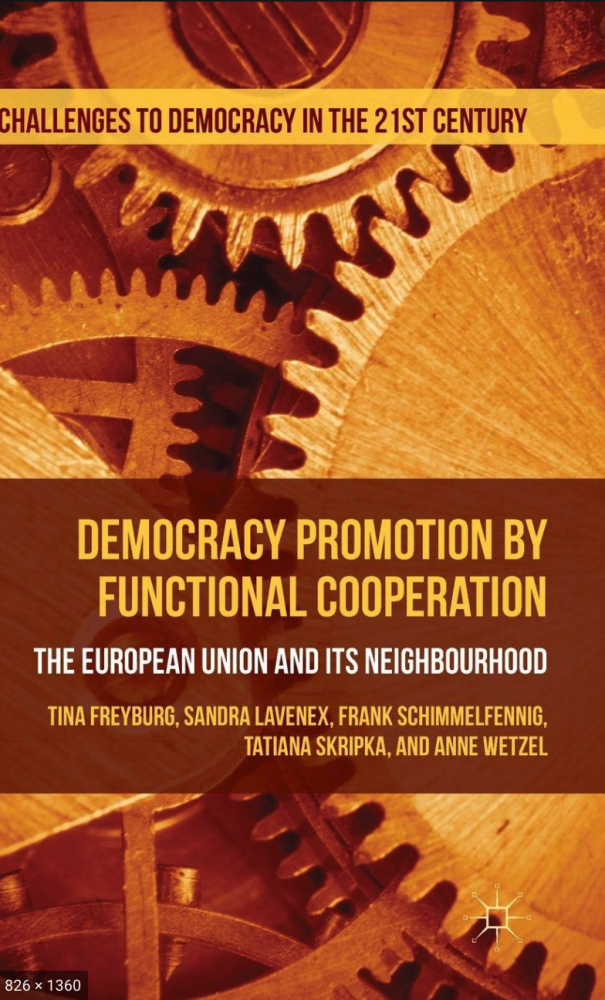
This book presents a novel 'governance model' of democracy promotion. In detailed case studies of EU cooperation with Moldova, Morocco, and Ukraine, it examines how the EU promotes democratic governance through functional cooperation in the fields of competition policy, the environment, and migration.
|
 |
|
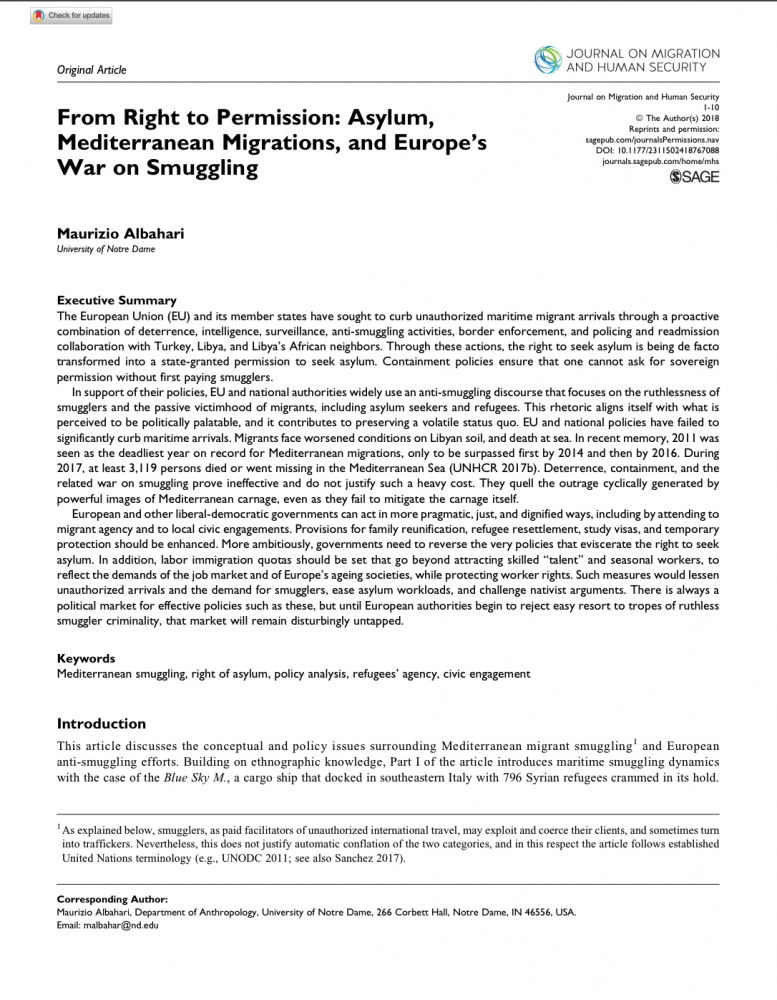
The European Union (EU) and its member states have sought to curb unauthorized maritime migrant arrivals through a proactive combination of deterrence, intelligence, surveillance, anti-smuggling activities, border enforcement, and policing and readmission collaboration with Turkey, Libya, and Libya’s African neighbors. Through these actions, the right to seek asylum is being de facto transformed into a state-granted permission to seek asylum. Containment policies ensure that one cannot ask for sovereign permission without first paying smugglers [read more] |
 |
|
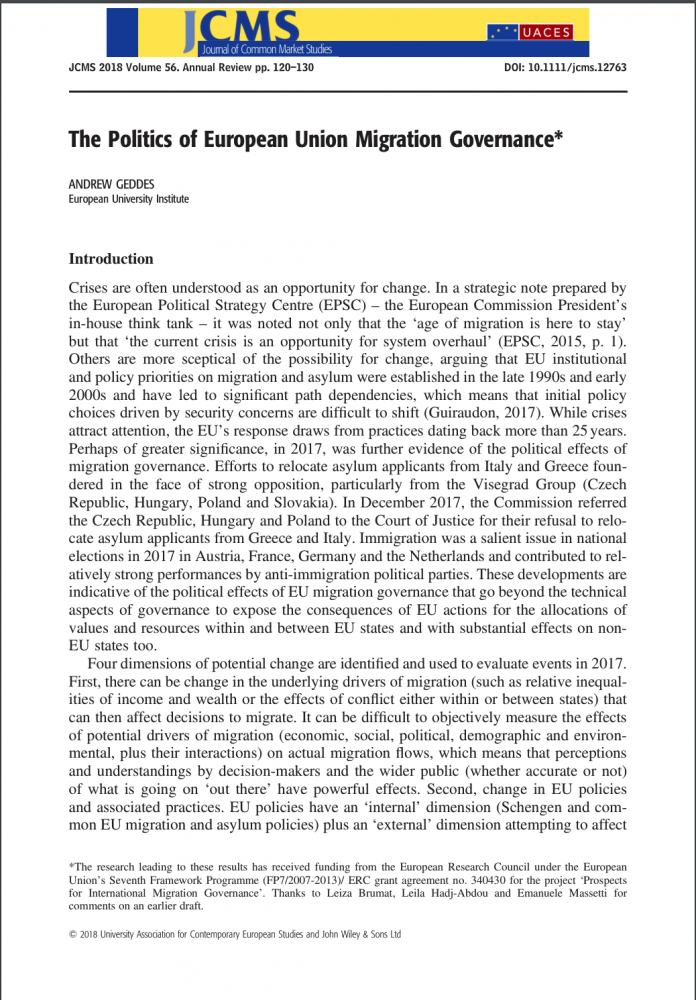
Four dimensions of potential change in EU migration governance are identified and used to evaluate events in 2017. First, there can be change in the underlying drivers of migration (such as relative inequalities of income and wealth or the effects of conflict either within or between states) that can then affect decisions to migrate. It can be difficult to objectively measure the effects of potential drivers of migration (economic, social, political, demographic and environmental, plus their interactions) on actual migration flows, which means that perceptions and understandings by decision-makers and the wider public (whether accurate or not) of what is going on ‘out there’ have powerful effects [read more] |
 |
|
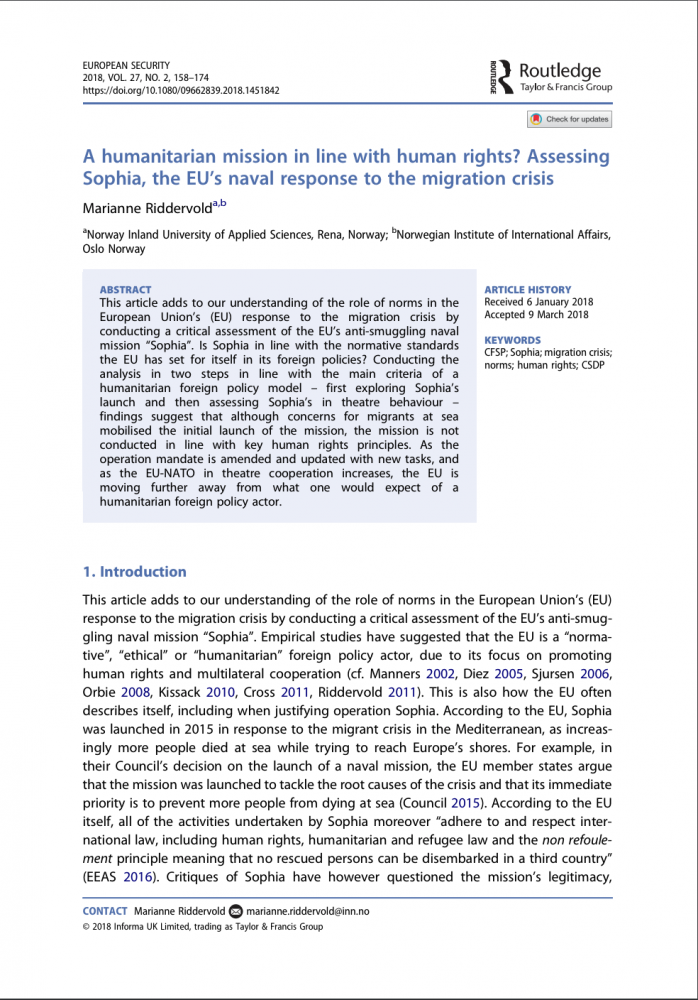
This article adds to our understanding of the role of norms in the European Union’s (EU) response to the migration crisis by conducting a critical assessment of the EU’s anti-smuggling naval mission “Sophia”. Is Sophia in line with the normative standards the EU has set for itself in its foreign policies? Conducting the analysis in two steps in line with the main criteria of a humanitarian foreign policy model – first exploring Sophia’s launch and then assessing Sophia’s in theatre behaviour – findings suggest that [read more] |
 |